
Tavern Master
ARK GAME LIMITEDStrategy
4.3524.00 Reviews
- Version
- 1.4.2
- Installs
- 500.00K
- Age Rating
- Teen
Screenshots
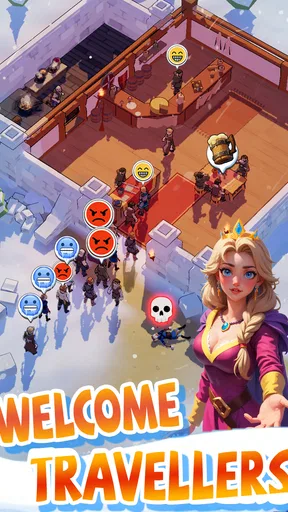
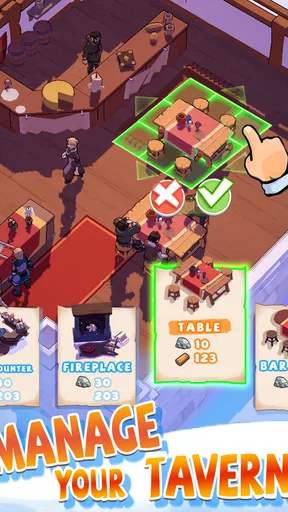

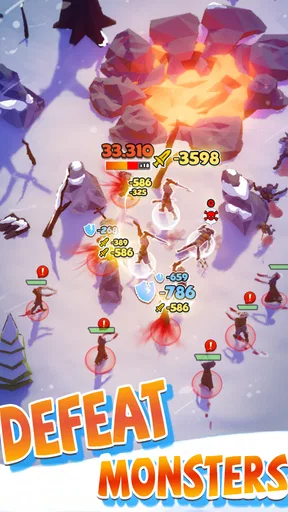
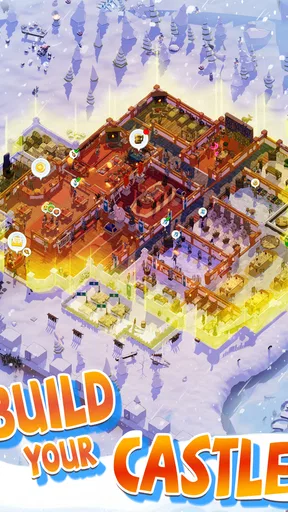
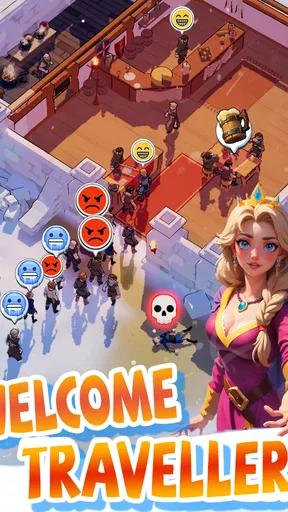
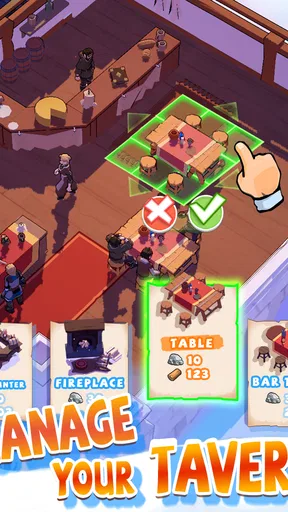

Our Review of Tavern Master
 Analysis by Appyee
I went into Tavern Master expecting a light strategy game built around the fantasy of running a busy medieval drinking house, and that is exactly the kind of experience it presents: a compact management game where the pleasure comes from arranging, crafting, and gradually making your tavern feel more successful. The central appeal is easy to understand. You are not simply moving units across a map or fighting through a campaign; you are shaping a place, deciding what it should offer, and trying to make each improvement feel worthwhile.
That difference matters. Tavern Master is aimed at players who enjoy watching a small operation become more polished through repeated decisions. It is a strategy game, but not one that demands the same mindset as a traditional empire builder or competitive battle game. I found it more personal and more relaxed than those alternatives, although it still asks me to think about priorities, timing, and how much effort I want to put into keeping the tavern moving forward.
The game is free to start, with optional purchases ranging from $0.99 to $99.99 per item. It carries a Teen content rating, so it is not presented as a children’s title despite the approachable premise. ARK GAME LIMITED is the developer, and the game has reached over 500 thousand installs with a 4.3 average from around 20 thousand ratings. Those figures suggest that the concept has found a sizeable audience, but they do not remove the most important question: does managing the tavern remain enjoyable once the first burst of discovery has passed?
From the first session to the first real routine
The first-week appeal comes from how quickly the premise makes sense. I do not need a long explanation to understand why a new room, a better arrangement, or a fresh crafting goal might help the business. The setting gives ordinary management choices a bit of personality. Instead of improving an abstract production line, I am trying to make a tavern that feels active, useful, and increasingly capable of handling its role.
That clarity is one of the game’s strongest qualities. A good opening in a management title should give me enough direction to act without making every decision feel predetermined. Tavern Master benefits from that balance when I am learning its rhythm. I can concentrate on the immediate task, notice the result, and then decide whether the next improvement should support efficiency, appearance, or progression.
The design-and-craft angle also makes the early hours more inviting than a purely numerical strategy game. I am not only watching values increase. I am thinking about what kind of tavern I want to build and which changes make it feel more complete. That visual and practical connection is important because it gives small upgrades a reason to exist beyond a larger number on a screen.
My advice during the opening stretch is to resist spending resources as soon as they become available. I found it more useful to pause after each meaningful improvement and consider what it actually changes in my routine. A decoration or expansion can be satisfying, but a functional upgrade may reduce repeated friction later. The best early decisions are not always the most attractive ones; they are the ones that make the next several actions easier to manage.
This is also where the game separates itself from familiar idle-management alternatives. Idle games often encourage me to collect rewards, tap through upgrades, and wait for the next automatic increase. Tavern Master feels more engaging when I treat the tavern as a place I am actively organizing rather than as a background number generator. On the other hand, players who want constant tactical pressure may find its opening too gentle. The fantasy is about building and maintaining a venue, not surviving an intense sequence of battles.
A realistic everyday use case is a short evening session after work or school. I can open the game, check what has changed, complete a few useful actions, and make one or two decisions without needing to commit to a long campaign. That makes it more suitable for casual routines than strategy games that punish a missed day with a complicated backlog. Still, the game works best when I have enough attention to make choices, not when I am looking for something completely passive.
What makes the first week satisfying
The most rewarding early habit is to connect every improvement to a purpose. Rather than treating crafting as a checklist, I would look at it as a way to support the tavern’s next stage. Rather than filling space simply because I can, I would think about whether the change improves the feeling of the venue or helps me reach a more useful milestone. This approach makes the game feel less like a sequence of errands.
I also recommend taking screenshots or simply remembering how the tavern looked before a major change. That sounds minor, but it makes progression easier to appreciate. Management games can hide their own improvement because the player sees every small step. Comparing the overall layout after several sessions helps reveal whether I am making deliberate choices or just accepting whatever the game presents next.
The early novelty is real, but it has a limit. The basic fantasy is immediately appealing, and the first improvements feel meaningful because the starting point is easy to understand. After that, the game needs enough variety in decisions to keep the routine from becoming automatic. That is where the longer-term evaluation becomes more important than the first impression.
What remains useful after the novelty fades
Month-to-month value depends on whether I continue to feel responsible for the tavern rather than merely present inside it. If each session offers a reason to rethink priorities, the game can become a comfortable long-term management activity. If every visit follows the same collection-and-upgrade pattern, the setting may remain pleasant while the decisions become less memorable.
I think Tavern Master has its best chance of lasting for players who enjoy gradual improvement and light planning. It can fit into a routine where I check progress, choose a practical next step, and return later to see the result. That loop is less demanding than a competitive strategy game, but it can also be less stimulating for someone who needs unpredictable opponents or high-stakes decisions to stay interested.
The crafting premise gives the progression a useful sense of direction. I am not improving randomly; I am working toward a more capable and more convincing tavern. The trade-off is that crafting-focused progression can become repetitive when the player’s role is reduced to collecting whatever is needed for the next recipe or upgrade. To keep the game enjoyable, I need to make my own priorities instead of following every prompt without reflection.
One practical method is to alternate between functional and personal goals. I might spend one session pursuing an improvement that makes the tavern easier to run, then use the next session to work on the atmosphere or layout I actually prefer. This prevents the experience from becoming a purely efficiency-driven exercise. It also gives me a reason to return even when the next major milestone is not immediately available.
Another useful habit is to avoid treating every available task as equally urgent. Management games often create the impression that the player is falling behind if several objectives remain unfinished. In Tavern Master, I found the experience more comfortable when I chose one main goal and allowed smaller tasks to wait. That reduces mental clutter and makes each visit feel like a decision-making session rather than an obligation to clear a list.
Compared with a traditional city builder, this game is easier to approach but likely offers a narrower strategic frame. A city builder may give me broader economic systems, larger-scale planning, and more complicated consequences. Tavern Master instead concentrates the fantasy around a single business. That focus is a strength when I want a more personal project, but a weakness if I am looking for a deep simulation with many interacting layers.
Compared with competitive strategy games, the appeal is calmer and more forgiving. I do not choose it for live pressure, elaborate combat theory, or the satisfaction of outsmarting another player. I choose it when I want to develop something at my own pace. That makes it a poor replacement for a competitive favorite, but a useful alternative when I want strategy without the emotional intensity of losing a match.
Who is likely to keep playing?
I would recommend it most strongly to players who like decoration and management to support each other. If you enjoy making a space feel increasingly complete, the tavern setting gives progression a clear emotional reward. It is also a good fit for people who prefer short, repeatable sessions and do not need every game to deliver a dramatic story or a demanding combat system.
I would be more cautious if you dislike recurring upkeep, gradual unlocks, or games that ask you to return regularly to maintain momentum. The free entry point makes it easy to try, but optional purchases can change how comfortable the progression feels for different players. I would personally play for a while before buying anything, then decide whether the game’s regular loop has earned that extra spending.
The Teen rating is another reason to consider the intended audience before installing. The tavern theme may sound harmless, but the listed age guidance places it above a young-child experience. For families choosing games together, I would check whether that rating fits the player rather than assuming the friendly art direction tells the whole story.
The maintenance burden of keeping the tavern enjoyable
Long-term value is not only about how much content a game contains. It is also about how much maintenance it demands from me. Tavern Master is most comfortable when I can give it attention in manageable portions. If I feel compelled to check constantly, the relaxing management fantasy can turn into another chore.
The best way to reduce that burden is to establish a simple personal schedule. I would open the game when I genuinely want to make progress, identify the most useful action, and stop after completing a sensible group of tasks. This is healthier than repeatedly checking for tiny changes throughout the day. It also helps preserve the feeling that I am playing the game rather than servicing it.
Version 1.4.2 indicates that the game is being presented in a specific current build, which is relevant when judging the experience today. I would still keep expectations realistic: a version number does not guarantee that every part of a management game will feel equally polished. My own standard is whether the core loop remains understandable and whether the occasional friction is small enough not to interrupt the pleasure of improving the tavern.
Resource planning is where maintenance can become either satisfying or tiring. If I use materials without considering the next stage, I may create unnecessary pauses later. A better workflow is to look ahead before committing to a large craft or expansion, then keep a small reserve for the next practical objective. This is a concrete advantage for patient players and a source of frustration for those who prefer immediate rewards.
I also found that layout decisions deserve more attention than they first appear to. A tavern can look improved while still feeling awkward if I place changes without considering the overall arrangement. Even when the game does not force a perfect design, thinking in terms of zones helps: keep related elements visually connected, leave the central area readable, and avoid making every corner compete for attention. That turns decoration into a small planning exercise instead of random placement.
There is a trade-off between optimization and expression. A highly efficient tavern may be easier to manage, but it may not be the one I enjoy looking at. A more personal layout can feel rewarding even if it is not the fastest route through progression. I appreciate that tension because it gives the player a reason to make choices for taste, not only for output.
Where the routine can become tiring
The main source of fatigue is repetition without a fresh decision attached to it. Collecting, crafting, and improving are enjoyable when they change the way I think about the tavern. They become less satisfying when I perform them only because the interface presents another task. This is a common risk in management games, and Tavern Master’s focused premise makes it especially important to notice.
Another possible strain is the gap between the fantasy and the actual routine. Running a tavern sounds lively, but the player experience can still become a sequence of menus, resources, and incremental improvements. If I want the atmosphere of a bustling venue more than the planning behind it, I may prefer a more story-driven or simulation-heavy alternative. The game’s charm cannot fully replace deeper systems for every type of player.
The purchase range also deserves a measured approach. Free access lowers the barrier to trying the game, while optional items can appeal to players who want to accelerate or extend their progress. I would avoid making a purchase during the first burst of excitement. Waiting until the routine has survived several separate sessions is a better test of whether the game has lasting value for me.
Players who are sensitive to repetitive tasks should set a clear stopping point. I would rather leave after a satisfying improvement than continue until the session feels like work. That habit protects the novelty and makes it easier to return later with interest. It is especially useful in a game built around gradual progress, where there is always another small objective waiting.
My long-term verdict on Tavern Master
After looking beyond the opening appeal, I see Tavern Master as a pleasant strategy game with a clear identity rather than a universal replacement for every management title. Its strongest idea is the connection between crafting, design, and the feeling of developing one personal venue. That gives ordinary progression a warmer sense of ownership than a purely abstract upgrade system.
Does it earn lasting space on my device? For me, yes, but with conditions. I would keep it installed as a relaxed, occasional game rather than a title I must check constantly. Its recurring value comes from setting my own goals, refining the tavern’s layout, and returning when I want a low-pressure planning session. It is less convincing if I demand constant novelty, deep simulation, or competitive tension.
The game is free, which makes the decision straightforward: try the core loop before considering any optional purchase. The Teen rating is worth keeping in mind, and the listed minimum requirement of Android 6.0 makes it accessible to a broad range of Android devices. The developer is ARK GAME LIMITED, and the current build is 1.4.2, so I would make sure my device meets that operating-system requirement before expecting a smooth installation.
My most useful recommendation is to play deliberately. Choose a clear improvement, plan the materials or actions it needs, and then decide whether the result genuinely improves your enjoyment. If it does, continue building around that style. If the game starts feeling like routine maintenance, take a break instead of forcing the next upgrade. The tavern fantasy works best when it feels like a place I want to shape, not a task list I am afraid to ignore.
Tavern Master earns its place as a casual long-term companion when you enjoy ownership more than urgency. I would recommend it to someone who wants a friendly crafting-and-management experience that can be revisited in short sessions. I would point a competitive strategist toward a deeper battle-focused game, and I would steer a player seeking a rich economic simulation toward a broader city or business builder. For everyone in between, this is an inviting experiment with enough personality to last—provided the simple routine continues to feel like play.
Verdict
Strengths of Tavern Master
- Simple interface makes tavern management easy to learn.
- Staff assignments and upgrades create satisfying strategic choices.
- Decorating the tavern adds a personal touch to each playthrough.
- Short play sessions work well for casual mobile gaming.
- Progression remains rewarding as the tavern expands and improves.
Limitations of Tavern Master
- Some upgrades require considerable waiting or repeated resource gathering.
- The management systems can feel shallow after extended play.
- Limited variety in customer behavior may reduce long-term challenge.
- Visuals are functional but may feel basic compared with newer games.
- Frequent tasks can become repetitive once the tavern is well established.
Other Releases by ARK GAME LIMITED
View All
Fishing Travel
Casual4.5

Farm Feud
Simulation4.8
Similar Picks in This Category
View All
Clash of Clans
Supercell4.5

Plants vs. Zombies™
ELECTRONIC ARTS3.7

Lords Mobile: Kingdom Wars
IGG.COM4.5

Clash Royale
Supercell4.4

State.io — Conquer the World
CASUAL AZUR GAMES4.1

Car Driving School : Car Games
Spark Game Studios3.9
Frequently Asked Questions
What is Tavern Master, and what do you do in the game?
Tavern Master is a management and simulation game in which you build, customize, and operate your own medieval tavern. You arrange rooms, place furniture, hire and manage staff, serve different types of guests, and improve the business over time. Success depends on balancing customer satisfaction, efficient layouts, available resources, and the tavern’s overall growth rather than simply decorating the building.
Is Tavern Master free to download and play?
Tavern Master can generally be downloaded for free, but the exact monetization system may vary depending on the platform and version available in your region. Players should check the store listing for information about advertisements, optional in-app purchases, or premium content. The main management experience is accessible without necessarily paying, although optional purchases may help unlock content or speed up progress.
Does Tavern Master require an internet connection?
Some parts of Tavern Master may work without a constant internet connection, which is useful when you want to manage your tavern while traveling or away from Wi-Fi. However, online access can still be required for downloading the game, receiving updates, synchronizing progress, displaying advertisements, or processing purchases. Because offline functionality can differ between versions, checking the current store description is recommended.
Is Tavern Master suitable for beginners who have never played management games?
Yes, Tavern Master is approachable for beginners because its core systems are introduced gradually. You can learn how to place furniture, organize service areas, assign employees, and respond to customer needs through normal gameplay. Nevertheless, later stages require more planning, since inefficient layouts, poorly managed staff, or uncontrolled expenses can slow progress. Players who enjoy experimenting should find the learning curve manageable.
What devices are compatible with Tavern Master, and does it need powerful hardware?
Compatibility depends on the specific Android or iOS version, operating-system requirements, and updates released by the developer. Tavern Master is designed as a management game rather than a graphically intense action title, so many modern phones and tablets should run it comfortably. Older devices may experience slower performance, longer loading times, or reduced stability, so review the official store requirements before downloading.
Play our best games!


